TCG Booster Packs: The Complete Guide
Last reviewed:
Quick answer
A TCG booster pack is a factory-sealed pack of randomized trading cards from a specific set — 10 cards in Pokémon, 14 in a Magic Play Booster, 9 in Yu-Gi-Oh!, 12 in One Piece and Lorcana, and 16 in Star Wars Unlimited. Which pack is best depends on your goal: opening fun, playable cards, a chase hunt, or sealed collecting. Because contents are random, no pack guarantees a specific card, and buying the single is usually the smarter move when you want one exact card.
What a TCG booster pack actually is
A booster pack is the basic unit of every major trading card game: a small, factory-sealed pack containing a fixed number of cards from one set. The cards follow a rarity structure — most slots hold commons and uncommons, and one or more slots are reserved for rarer cards — but which specific cards fill those slots is random. That randomness is not a flaw; it is the entire design. Publishers build sets so that most packs contain ordinary cards and a small fraction contain the spectacular ones, which is what makes opening a pack feel like something. It is also exactly why no honest site can promise you what a pack will contain.
Everything on this page follows from that one fact. Booster boxes are just packs in bulk. Elite Trainer Boxes and bundles are packs plus accessories. Chase cards are the cards that appear rarely enough that most packs will not have one. And every buying decision — packs versus singles, box versus bundle, this set versus that set — comes down to matching a random product to a specific goal. This guide covers the six major games, every sealed product type you will encounter, how rarity works, and how to choose. Where a topic deserves its own deep dive, our guide library goes further on each one.
Warning
Opening packs is random. No pack, box, or sealed product guarantees a specific card unless the product explicitly states it. Any listing or video implying otherwise is misleading you.
The six major TCGs and how their packs differ
Six games dominate the English-language sealed market right now: Pokémon TCG, Magic: The Gathering, Yu-Gi-Oh!, One Piece Card Game, Disney Lorcana, and Star Wars Unlimited. They share the booster-pack format but differ in card counts, box sizes, rarity ladders, and what their communities chase. Pokémon is the biggest collector market with heavy demand for alternate-art cards. Magic is the deepest game, with multiple booster product lines aimed at different buyers. Yu-Gi-Oh! runs compact 9-card packs with a dense rarity system. One Piece and Lorcana are newer games whose top rarities — manga rares and Enchanted cards — have become serious chases in their own right, and Star Wars Unlimited packs a leader and base card into every booster to support its play format.
| Game | Cards per pack | Typical booster box | Signature chase style |
|---|---|---|---|
| Pokémon TCG | 10 | 36 packs (EN) / 30 (JP) | Illustration Rares and Special Illustration Rares |
| Magic: The Gathering | 14 playing cards | 36 Play Boosters | Borderless and extended-art rares; Collector Booster treatments |
| Yu-Gi-Oh! | 9 | 24 packs | Secret Rares and Quarter Century Secret Rares |
| One Piece Card Game | 12 | 24 packs | Alternate-art leaders and manga rares |
| Disney Lorcana | 12 (incl. 2 foils) | 24 packs | Enchanted rares |
| Star Wars Unlimited | 16 (incl. leader, base, foil) | 24 packs | Showcase leaders and hyperspace foils |
The practical differences matter more than the numbers suggest. A Magic Play Booster is designed to be drafted, so it deliberately mixes playable cards at every rarity. A Pokémon pack is engineered around the reveal — the rare slot at the back of the pack. Yu-Gi-Oh! sets reprint aggressively, which keeps singles cheap but concentrates chase value in the very top rarities. One Piece and Star Wars Unlimited packs cost about the same as Pokémon packs but come from smaller print runs, which affects availability more than odds. If you are picking a first game, choose by what you want to do with the cards, not by which chase card is trending this month. All six games also ship new sets on a regular cadence — roughly every two to three months for the biggest — and each release resets the shelf: current sets sell near retail while older sets drift upward as supply dries up. That cadence makes patience a pricing strategy, because the set that is sold out and marked up this month is often back at list price within a quarter, and there is always another set coming.
Compare popular packs
| Product | Game | Set | Type | Packs | Chase | Beginner | Collector | Pull data | Marketplace link |
|---|---|---|---|---|---|---|---|---|---|
| Destined Rivals Booster Pack casual opening | Pokémon | Destined Rivals | Booster Pack | 1 | ●●●●○ | ●●●●○ | ●●●●○ | Yes (est.) | View on TCGplayer |
| Awakening of the New Era Booster Pack Gear 5 Luffy chasers | One Piece | Awakening of the New Era | Booster Pack | 1 | ●●●●● | ●●●○○ | ●●●●● | Yes (est.) | View on TCGplayer |
| FINAL FANTASY Play Booster drafting | MTG | Magic: The Gathering — FINAL FANTASY | Play Booster | 1 | ●●●●○ | ●●●●○ | ●●●○○ | Yes (est.) | View on TCGplayer |
| Supreme Darkness Booster Pack casual opening | Yu-Gi-Oh! | Supreme Darkness | Booster Pack | 1 | ●●●●○ | ●●●○○ | ●●●○○ | Yes (est.) | Details |
| The First Chapter Booster Pack Disney collectors | Lorcana | The First Chapter | Booster Pack | 1 | ●●●●○ | ●●●●○ | ●●●●○ | Yes (est.) | Details |
| Spark of Rebellion Booster Pack Star Wars fans | SWU | Spark of Rebellion | Booster Pack | 1 | ●●●●○ | ●●●●○ | ●●●●○ | — | Details |
TCG Pax uses affiliate links. We may earn a commission from TCGplayer at no extra cost to you. Details
Every sealed product type, explained
Walk into any card aisle and you will see far more than loose packs. Almost every sealed product is one of two things: randomized boosters in different wrappers, or a fixed product with a known card list. Knowing which is which is the single most useful piece of buying knowledge, because randomized products should be judged on price per pack and fixed products on their card list. Here is every common product type and what it actually contains.
| Product | What you get | Random or fixed? | Best suited to |
|---|---|---|---|
| Booster pack | One randomized pack | Random | Trying a set, small gifts, the opening experience |
| Booster box / display | 24–36 packs, sealed by the factory | Random | Players and openers who want the lowest price per pack |
| Elite Trainer Box (Pokémon) | 9 packs plus sleeves, dice and accessories | Random (packs) | New Pokémon players who also need supplies |
| Booster bundle | 6 packs in a slim box (Pokémon) | Random | A cheaper way into special sets than an ETB |
| Sleeved / blister booster | 1–3 packs carded for retail pegs, sometimes with a promo | Random (packs) | Impulse buys and stocking stuffers |
| Collector Booster (MTG) | A premium pack of mostly foil and special-treatment cards | Random | Collectors chasing special card treatments |
| Tin / collection box | A few packs plus fixed promo cards | Mixed | Gifts; buyers who want a specific promo |
| Starter / structure deck | A ready-to-play deck with a printed card list | Fixed | New players learning the game |
A rule of thumb that cuts through most product confusion: divide the price by the number of packs inside. An Elite Trainer Box at 50 dollars with 9 packs costs about 5.50 per pack — you are paying a premium for the accessories and the box. A 36-pack booster box at 140 dollars is under 4 dollars per pack. Neither is wrong, but you should know what you are paying for. One thing the price-per-pack math never changes: every standard booster pack inside any of these products has the same odds. There is no official evidence that packs from ETBs, tins, or bundles are seeded differently from packs in a booster box, and you should be skeptical of anyone claiming otherwise.
How rarity and chase cards work
Every game arranges its cards in a rarity ladder, from commons you will see constantly to top-end cards that appear in a small fraction of packs. The names differ — Pokémon runs from common up through Illustration Rare, Special Illustration Rare, and gold Hyper Rare tiers; Magic uses common through mythic rare plus special treatments; Yu-Gi-Oh! stacks Super, Ultra, Secret, and Quarter Century Secret Rares; Lorcana tops out at Enchanted; One Piece at manga rares; Star Wars Unlimited at showcase treatments. The structure is the same everywhere: the higher the tier, the fewer packs contain one. Rarity tiers also do a quiet second job: they set the print ratios that make commons nearly free and top tiers expensive, which makes a set’s rarity structure the skeleton of its entire price list. Learn to read the ladder in your game and most market prices stop being mysterious.
A chase card is simply the card enough people want that it drives demand for a set — usually a top-rarity alternate art of a beloved character. Chase cards are why two sets with identical odds structures can sell at very different prices: the market prices the specific cards, not the abstract rarity. Community openings suggest top-tier chase cards typically appear somewhere between 1 in 50 and 1 in several hundred packs depending on the game and tier. Treat every such number as an observed estimate from limited samples, never as a promise. Publishers almost never publish official odds, and our numbers come from tracked community data with sample sizes attached.
Estimates, not guarantees
Pull statistics are estimates based on available data and may vary. Stats are estimates, not guarantees — they help set expectations, but they do not change your odds or promise results in any number of packs.
Run your own numbers
Enter any estimated pull rate and pack count to see the statistical chance of at least one hit — and how many packs a 50%, 75% or 90% chance needs. Estimates only; packs stay random.
Open the pack odds calculatorHow to choose a pack by goal
- Beginner: start with a starter or structure deck to learn the game, then add a few boosters from the current main set. Fixed products teach; random products expand.
- Player: buy the cheapest packs per unit (usually a booster box) from sets legal in your format — or skip sealed entirely and buy the exact singles your deck needs.
- Chase hunter: price the single first. If you still want to hunt, choose the set whose chase card you actually want, buy at the best per-pack price, and set a budget before you open.
- Sealed collector: condition and authenticity matter more than odds. Factory-sealed boxes from reputable sellers, stored well, are the standard — but sealed prices can fall as well as rise.
- Gift buyer: a few packs from a recent, popular set, or an Elite Trainer Box if you want a bigger box to wrap. Recent sets avoid the price premium older sets carry.
The common thread is that the right purchase follows the goal, not the hype. A pack that is perfect for a drafter can be a poor buy for a collector, and the set with this month’s most talked-about chase card is often the most expensive way to get ordinary cards. Our pack pages score each product for beginner-friendliness, player value, chase potential, and sealed collecting so you can match a product to your goal, and the how-to-choose guide walks through the full decision framework step by step. One caution applies across every profile: buy the product for what it is today, not for what someone in a video predicted it will be worth later. Sealed prices can fall as well as rise, and buying packs as an investment is speculation dressed up as collecting.
Packs vs singles: the honest answer
Here is the part many affiliate sites soften: if you want one specific card, buying the single is almost always cheaper and always more predictable than opening packs until it appears. A card that shows up in roughly 1 in 100 packs costs, on average, around 100 packs’ worth of money to pull — frequently several times the single’s market price — and randomness means you could easily spend more than that and still miss. Opening packs is entertainment plus a lottery on the contents; buying a single is a purchase. Both are legitimate, but only if you are honest with yourself about which one you are doing. If the opening experience itself is worth the money to you, that is a real reason to buy packs. If it is not, buy the single and spend the difference on something else. The exception worth naming is bulk: when the goal is hundreds of playable commons and uncommons for a cube, a binder, or a new player’s starting pool, packs deliver breadth per dollar that buying cards one at a time cannot match. Precision wants singles; breadth tolerates packs; entertainment justifies packs on its own terms.
Where booster packs are sold
Sealed product is sold through big-box retail, local game stores, publishers’ own stores, and online marketplaces. Retail shelves usually carry current sets at standard prices; local stores add expertise and events; marketplaces like TCGplayer aggregate thousands of sellers, which makes them the easiest place to compare prices on current and older sealed products — and the main place to buy singles when that is the smarter route. Disclosure: some links on TCG Pax are affiliate links, and we may earn a commission if you click and buy through TCGplayer, at no extra cost to you. Our recommendations are based on pack contents, set data, statistics, and availability — not on commission. Wherever you buy, compare the total price including shipping, and favor sellers with strong ratings on sealed items. Two checks before any sealed purchase: confirm the product is factory-sealed rather than resealed — established marketplaces with seller ratings make this dramatically less likely — and compare the asking price against current retail so you know whether a markup reflects genuine scarcity or just optimism.
Popular packs right now
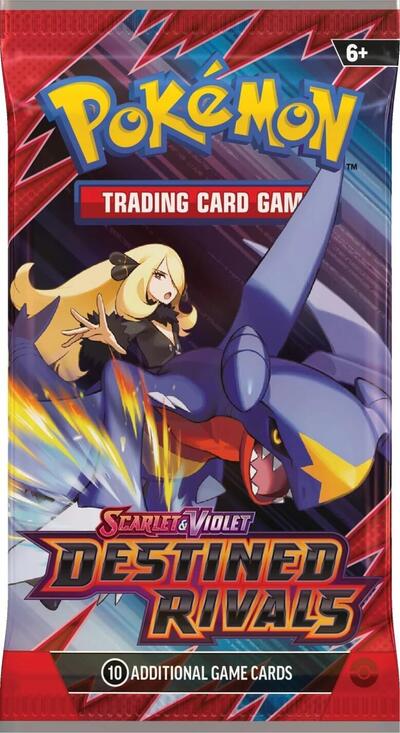
Destined Rivals Booster Pack
A single 10-card Destined Rivals booster with random contents. Team Rocket Special Illustration Rares are the estimated top pulls, but no specific card is guaranteed in any pack. A fine impulse open; for a specific card, compare the cost of the single first.
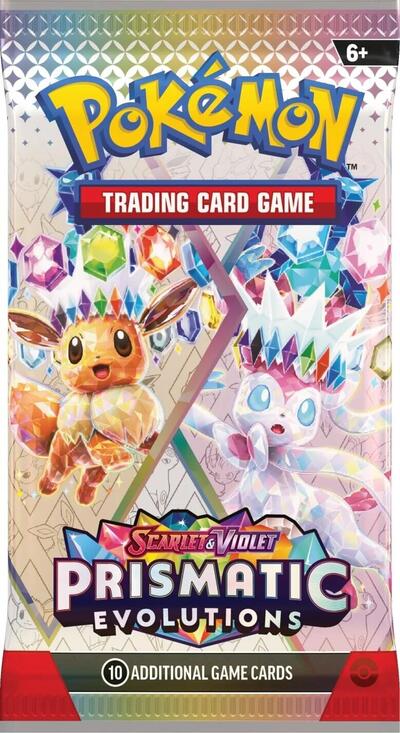
Prismatic Evolutions Booster Pack
A single 10-card Prismatic Evolutions pack with random contents. This special set has no standard booster boxes, so loose packs mostly come from broken-down ETBs and bundles and often trade above MSRP. Eeveelution SIR odds are long — estimated, not guaranteed — so price singles before chasing.
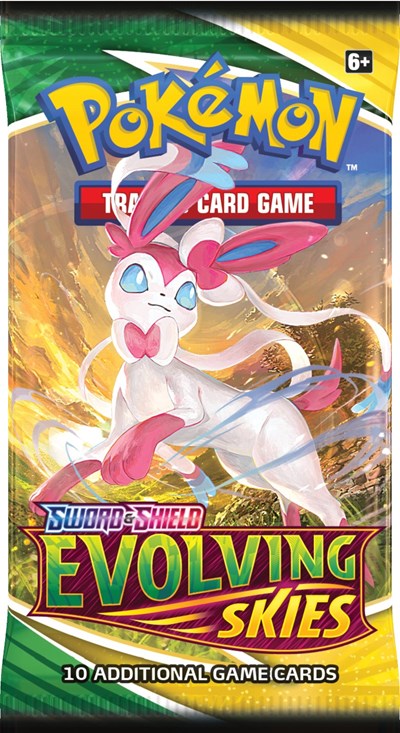
Evolving Skies Booster Pack
A single 10-card pack from the 2021 Eeveelution alt-art set, now a secondary-market item trading far above original MSRP. Alt-art VMAX odds were long even at release; a loose pack is a lottery ticket, not a value buy. Buy only from reputable sellers — this set is a known target for resealed and weighed packs.
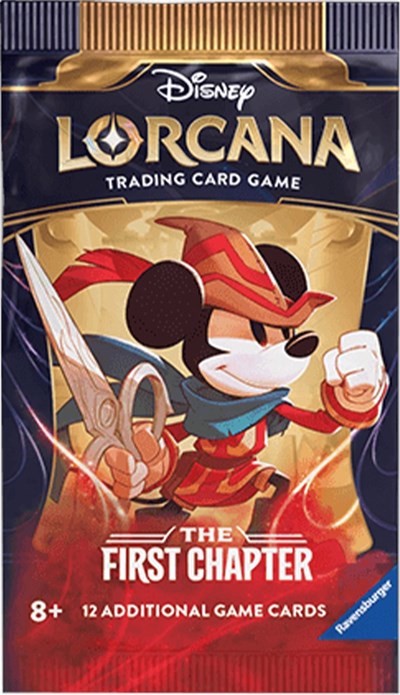
The First Chapter Booster Pack
A 12-card pack from Lorcana's debut set. Enchanted rares like Elsa, Spirit of Winter are the chase, at community-observed odds around 1 in 80–100 packs — a single pack is overwhelmingly likely to miss that tier. First-print packs carry collector interest; later reprints are more affordable, so check which printing a listing ships.
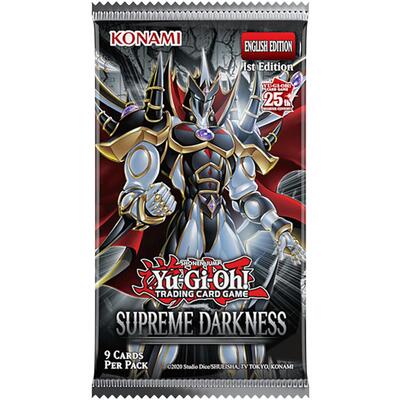
Supreme Darkness Booster Pack
A 9-card core booster from Supreme Darkness. Quarter Century Secret Rares are the estimated top pulls, at roughly one per box by community observation — so a single pack is a long shot. Best treated as a casual open or a way to pick up current archetype support.
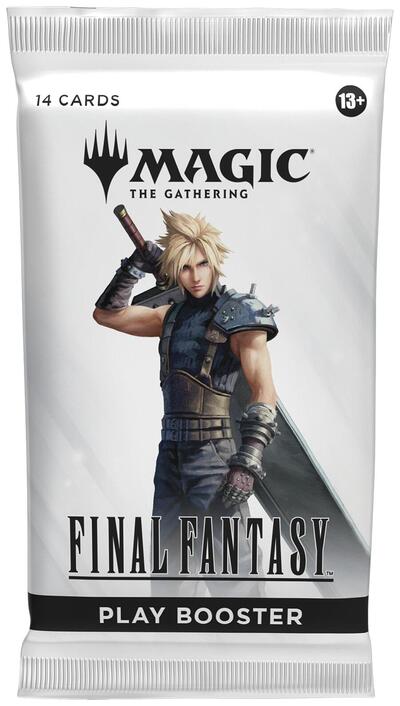
FINAL FANTASY Play Booster
A 14-card Play Booster from the FINAL FANTASY set, designed for drafting and general opening. Borderless character treatments can appear, but they are concentrated in Collector Boosters — a Play Booster is the gameplay-first way to open this set. Heavy demand pushed street prices above MSRP at times; check the current listing.
Collect responsibly
Booster packs are randomized products, and opening a lot of them chasing a specific card has the same psychology as any other game of chance. Set a budget before you buy, treat pack opening as entertainment you pay for rather than a way to acquire value, and remember that the average opener gets back less in card value than they spend — that margin is how the hobby is funded. If you find yourself opening packs to recover what you spent on earlier packs, stop and buy the single instead. Open packs for fun and collecting; if you need a specific card, compare the cost of buying it outright. The hobby is genuinely great when the randomness is the entertainment and not the plan. A simple habit makes the difference: decide the number of packs before you see any results, and let the number — not the last pack’s contents — decide when you stop.