Skip to content

TCG Pax uses affiliate links. We may earn a commission from TCGplayer at no extra cost to you. Learn more

TCGPax

Packs or Singles? The Honest Math Behind the Choice

Last reviewed:

Quick answer

For any specific card, singles win: you pay a known price and get exactly the card, while packs offer only a small chance per pack at a similar or higher total cost. Packs win when the goal is the experience itself — opening fun, set breadth, draft night, or a gift. The mistake is using one tool for the other job.

Two different products, honestly framed

A single is a card. A pack is an experience with cards inside. Priced per specific card obtained, packs are almost always the expensive route; priced per moment of fun or per playable card added to a collection, they can be excellent. Deciding between them starts with naming what you are actually buying.

The math, in plain terms

Suppose a chase card sells for $60 as a single, packs cost $4.50, and the card is observed around 1 in 100 packs. On average it takes about 100 packs — roughly $450 — to see one copy, and our pull-rate guide shows that even then about a third of people miss across 100 packs. The single costs $60, arrives sleeved, and involves zero luck. The rest of a pack’s contents have some value, but for most sets the typical pack’s contents resell for well under its price — which is fine, because resale value is not why people open packs.

Warning

If you need a specific card, compare the cost of buying the single first. Opening packs is random; no quantity of packs guarantees the card.

When singles win

  • You want one specific card, for play or collection: known price, exact card, chosen condition.
  • You are finishing a deck: buying a decklist as singles costs a fraction of pulling it from packs.
  • You care about condition or a particular printing: listings let you choose; packs do not.
  • Your budget is tight: singles convert every dollar into exactly the cards you want.

When packs win

  • The opening is the point: the ritual, the reveal, the session with friends — real value if you enjoy it.
  • You want breadth: starting a collection or building a trade binder, packs deliver volume efficiently.
  • Limited formats: draft and sealed are played from packs by design.
  • Gifts: packs are a better gift than singles almost every time — the experience is the present.
  • No strong target: if you would be happy with many different pulls, randomness stops being a downside.

The honest hybrid approach

Most experienced collectors land on a split: singles for anything specific, plus a deliberate "fun budget" of packs for sets they love. The fun budget is spent expecting nothing — an approach that makes good pulls a delight and ordinary packs still worth the price. What this site will never tell you is that packs are a way to come out ahead financially; sealed products are entertainment and collecting, not a financial plan.

Estimates, not guarantees

Prices and observed rates in examples are illustrative estimates. Check current single and pack prices before deciding — the gap between them varies a lot by set.

A 30-second decision checklist

  1. Name the card (or admit there isn’t one). A specific card means: price the single.
  2. Compare the single price with what you would realistically spend on packs.
  3. If you still want packs, confirm the spend feels worth it with zero big pulls.
  4. Buy accordingly, and do not revisit the decision mid-opening.
Products mentioned

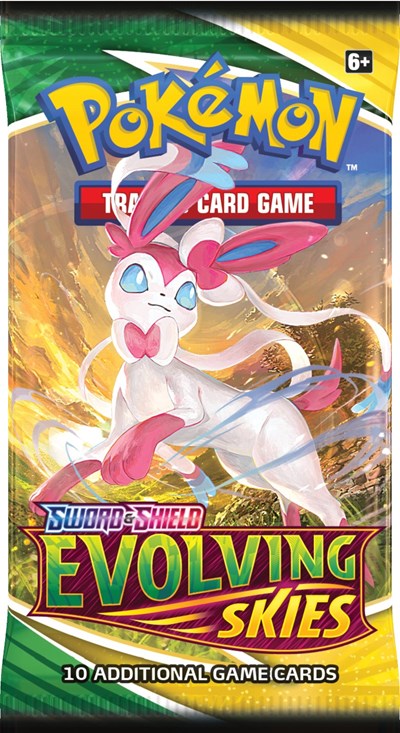
Evolving Skies Booster Pack

Evolving Skies Booster Pack

PokémonBooster Pack

A single 10-card pack from the 2021 Eeveelution alt-art set, now a secondary-market item trading far above original MSRP. Alt-art VMAX odds were long even at release; a loose pack is a lottery ticket, not a value buy. Buy only from reputable sellers — this set is a known target for resealed and weighed packs.

10 cards/packMSRP $4.49
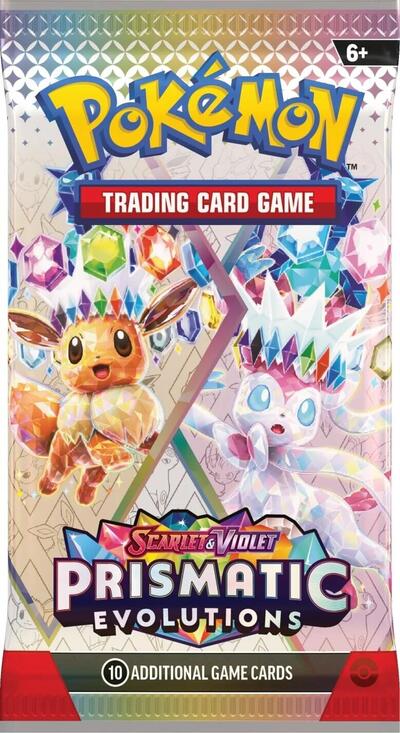
Prismatic Evolutions Booster Pack

Prismatic Evolutions Booster Pack

PokémonBooster Pack

A single 10-card Prismatic Evolutions pack with random contents. This special set has no standard booster boxes, so loose packs mostly come from broken-down ETBs and bundles and often trade above MSRP. Eeveelution SIR odds are long — estimated, not guaranteed — so price singles before chasing.

10 cards/packMSRP $4.49
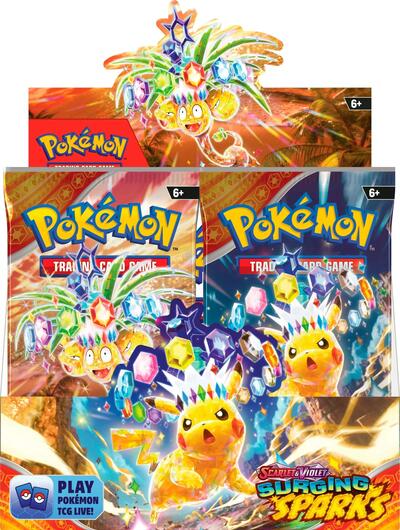
Surging Sparks Booster Box

Surging Sparks Booster Box

PokémonBooster Box

A standard 36-pack Surging Sparks booster box. A box provides a broad sample of the set but does not guarantee the Pikachu ex SIR or any other specific card. Demand has kept this set popular past release, so compare the live price to MSRP before buying.

36 packsMSRP $161.64
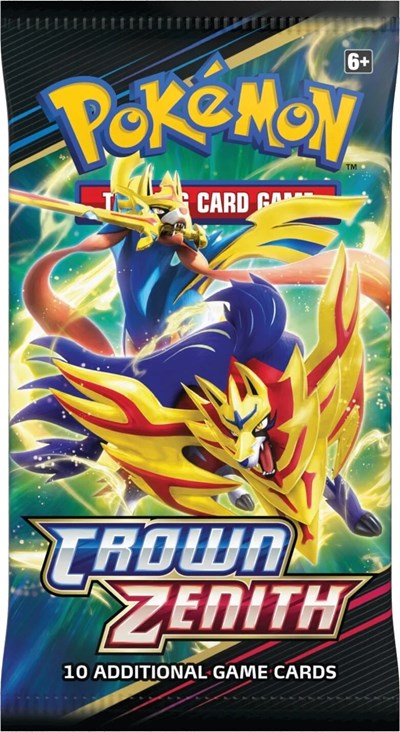
Crown Zenith Booster Pack

Crown Zenith Booster Pack

PokémonBooster Pack

A single 10-card Crown Zenith pack. This special set was never sold in standard booster boxes — packs ship inside Elite Trainer Boxes, tins and special collections, so loose packs on the market come from broken-down products. Galarian Gallery cards like Giratina VSTAR are the estimated top pulls; contents are random and nothing is guaranteed.

10 cards/packMSRP $4.49

Frequently asked questions

Are singles always cheaper than packs?

For a specific card, almost always — the expected pack cost of pulling a rare card usually exceeds its single price by a wide margin. For broad collecting, packs can be the cheaper way to acquire volume.

Is opening packs a waste of money?

Not if you value the experience. Packs are entertainment plus cards. They are only a "waste" when bought as a substitute for a single you actually wanted.

What about pack value versus what is inside?

For most sets, the typical pack’s contents resell for less than the pack costs — rare hits are what balance the books, and most packs don’t have one. Buy packs for fun and breadth, not resale.

Where should I buy singles?

Marketplaces like TCGplayer aggregate thousands of sellers with condition grades and ratings, which makes price comparison straightforward. Our TCGplayer guide covers how to read listings well.

Sources

  • TCGplayer marketplace (listings & search)Non-official · reviewed Jul 24, 2026
  • TCG Pax internal editorial analysis (community-observed ranges)Non-official · reviewed Jul 25, 2026
  • TCG Pax editorial teamNon-official · reviewed Jul 24, 2026

Keep reading

Statistics

How Pull Rates Work: Odds, Sample Size, and What Stats Can’t Promise

A pull rate is the estimated frequency of a card or rarity appearing in packs — for example, "about 1 in 100 packs." Most pull rates are observed from community openings, not published by publishers, so they are estimates with real uncertainty. Even a solid estimate never guarantees results: at 1 in 100, opening 100 packs gives you only about a 63% chance of at least one hit.

Updated Jul 24, 2026

Strategy

Best Packs for Chase Cards: The Honest Hunter’s Guide

The honest first rule of chase hunting: price the single before you open anything — for any one specific card, buying it outright is more predictable and usually cheaper than pulling it. Sealed makes sense when you would enjoy the packs regardless, when you want many cards from one set, or in premium lines like Collector Boosters where the treatments you want are concentrated. Estimated odds never guarantee a hit.

Updated Jul 24, 2026

Buying

How to Use TCGplayer: A Buyer’s Guide to the Marketplace

TCGplayer is a marketplace where thousands of independent sellers list singles and sealed product, so the same card appears at many prices and conditions. Buying well means comparing total price (item plus shipping), reading condition grades, checking seller ratings, and understanding TCGplayer Direct. Disclosure: TCG Pax earns a commission on some TCGplayer links, at no extra cost to you.

Updated Jul 24, 2026