Every TCG Sealed Product, Compared
Last reviewed:
Quick answer
Almost every TCG sealed product is one of two things: randomized booster packs in a different wrapper, or a fixed product with a published card list. Booster boxes usually offer the lowest street price per pack, Elite Trainer Boxes and troves charge a premium for accessories, booster bundles are the cheap sampler, and starter decks are the only zero-variance buy. Judge random products by price per pack and fixed products by their card list — and when one specific card is the goal, the single usually beats any sealed product.
Two kinds of product wear every wrapper
Stand in front of any card wall and the variety looks overwhelming: loose packs, fat boxes, Elite Trainer Boxes, bundles, blisters hanging on pegs, tins, troves, decks, prerelease kits. The taxonomy collapses the moment you ask one question about each product: are the cards inside random, or are they printed on a list? Almost everything sold sealed is one of two things — randomized booster packs in a different wrapper, or a fixed-content product whose exact card list is published before you buy. Elite Trainer Boxes, bundles, tins, troves, displays, and blisters are all the first thing: the same random packs, repackaged with different extras at different per-pack prices. Starter decks, structure decks, two-player sets, and Commander precons are the second: zero randomness, known contents, known value. Every buying decision in this hobby gets simpler once the wall sorts itself into those two shelves.
The split matters because the two families are judged by different math. A randomized product should be evaluated on price per pack, because the wrapper never changes what is inside the packs — accessories, promo cards, and presentation are what the premium buys, not luck. A fixed product should be evaluated on its card list, because you can literally read what you are buying and price the contents before you pay. Products that mix both — a tin holding two fixed promos and a handful of random packs — split cleanly into halves: price the promos as singles, price the packs per pack, add them up, and compare against the sticker. That is the whole method. The rest of this page is the taxonomy in detail, the math worked through with real products, and a decision framework for matching product to goal.
Warning
Opening packs is random. No pack, box, or sealed product guarantees a specific card unless the product explicitly states it — and the wrapper a pack arrives in, whether booster box, Elite Trainer Box, tin, or bundle, does not change the odds inside the pack.
Every sealed product type, explained
The randomized family first. The booster pack is the atom: one factory-sealed pack of random cards from a set. A booster box — called a display in Magic, One Piece, Lorcana, and Star Wars Unlimited — is the factory case of those packs, 36 in English Pokémon and Magic, 24 in most other games, and the standard bulk unit for openers. Pokémon then wraps packs in more shapes than anyone: the Elite Trainer Box holds 9 packs plus sleeves, dice, energy cards, and a promo; the booster bundle holds 6 packs and nothing else; sleeved boosters and blisters put one to three packs on retail pegs, sometimes with a promo card attached. Magic splits its booster line in two: the Play Booster is the standard 14-card draft-ready pack, while the Collector Booster is a premium 15-card pack of foils and special treatments at several times the price — same set, very different product, and the type matters more than the set name on any Magic listing.
The mixed and fixed family covers the rest. Collection boxes and troves bundle packs with accessories and promos — Lorcana’s Illumineer’s Trove is the cleanest example, packing 8 boosters with a storage box, dividers, and dice. Tins are the small version: a few packs plus fixed promo cards, a Pokémon holiday staple and Yu-Gi-Oh!’s traditional reprint vehicle. Then the fully fixed products: starter and structure decks print their entire card list on the box or the publisher’s site — Yu-Gi-Oh! structure decks, Lorcana starter decks, Magic’s Commander precons, and Star Wars Unlimited’s two-player starter, which teaches two people at once out of one purchase. Prerelease kits sit at the edge of retail: packs plus promos and event materials, built for organized-play launch weekends rather than shelf sales. Every one of these decodes with the random-or-fixed question and the per-pack division, and none of them changes what any individual pack can contain.
| Product type | Typical contents | Rough price band | Random or fixed? | Best suited to |
|---|---|---|---|---|
| Booster pack | 1 randomized pack | $4–7 | Random | Sampling a set; small gifts; the opening moment |
| Booster box / display | 24–36 packs, factory sealed | $85–170 | Random | Bulk openers; lowest street price per pack |
| Elite Trainer Box (Pokémon) | 9 packs + sleeves, dice, promo | ≈ $50 | Random packs + fixed extras | New collectors who also want supplies |
| Booster bundle (Pokémon) | 6 packs, no extras | ≈ $27 | Random | Cheapest retail route into special sets |
| Sleeved booster / blister | 1–3 packs, sometimes a promo | $5–15 | Random (+ fixed promo) | Impulse buys; stocking stuffers |
| Play Booster (MTG) | 14-card standard pack | $4–6 | Random | Drafting; general opening |
| Collector Booster (MTG) | 15 premium foil/treatment cards | $20–35 | Random | Treatment chasers who accept the variance |
| Collection box / trove | Packs + storage + promos | $30–80 | Mixed | Gift buyers; new players wanting accessories |
| Tin | 2–5 packs + fixed promos | $16–30 | Mixed | Buyers who want the specific promo |
| Starter / structure / two-player deck | Complete deck(s), published list | $10–45 | Fixed | Learning the game; zero-variance value |
| Prerelease kit | Packs + promos + event extras | $25–40 | Mostly random | Launch-weekend event players |
Read the table with two caveats. The price bands are rough US retail figures as of the July 2026 review — street prices move constantly, hyped sets trade above list, and older products drift with the secondary market, so treat every band as orientation rather than a quote. And the two columns that actually decide purchases are the last two: randomness tells you which math to use, and the use case tells you whether the product was built for someone like you. To make the comparison concrete, here is one real product of each major type side by side.
One product of each type, compared
| Product | Game | Set | Type | Packs | Chase | Beginner | Collector | Pull data | Marketplace link |
|---|---|---|---|---|---|---|---|---|---|
| Destined Rivals Booster Pack casual opening | Pokémon | Destined Rivals | Booster Pack | 1 | ●●●●○ | ●●●●○ | ●●●●○ | Yes (est.) | View on TCGplayer |
| Destined Rivals Booster Box bulk opening | Pokémon | Destined Rivals | Booster Box | 36 | ●●●●○ | ●●●○○ | ●●●●○ | Yes (est.) | View on TCGplayer |
| Destined Rivals Elite Trainer Box new collectors | Pokémon | Destined Rivals | Elite Trainer Box | 9 | ●●●●○ | ●●●●● | ●●●●○ | Yes (est.) | View on TCGplayer |
| Destined Rivals Booster Bundle best per-pack retail price | Pokémon | Destined Rivals | Booster Bundle | 6 | ●●●●○ | ●●●●○ | ●●●●○ | Yes (est.) | View on TCGplayer |
| FINAL FANTASY Collector Booster chasing borderless treatments | MTG | Magic: The Gathering — FINAL FANTASY | Collector Booster | 1 | ●●●●● | ●●○○○ | ●●●●● | Yes (est.) | View on TCGplayer |
| Archazia's Island Illumineer's Trove new players who want storage and accessories | Lorcana | Archazia's Island | Collection Box | 8 | ●●●●○ | ●●●●● | ●●●○○ | — | Details |
| Shadows of the Galaxy Two-Player Starter two friends learning SWU together | SWU | Shadows of the Galaxy | Starter Deck | 1 | ●○○○○ | ●●●●● | ●○○○○ | — | Details |
TCG Pax uses affiliate links. We may earn a commission from TCGplayer at no extra cost to you. Details
The per-pack math, worked with real products
Divide the price by the number of packs inside — that one division decodes almost every randomized product. Run it across the Destined Rivals lineup and a Lorcana trove and something surprising appears: at manufacturer’s suggested prices, the Pokémon pack, bundle, and booster box all cost an identical $4.49 per pack. On paper there is no bulk discount at all. The real spread shows up in street prices: booster boxes routinely sell below the sum of their packs because supply concentrates there, while hyped loose packs and small products hold at or above list — which is why the box usually beats loose packs in practice even when the stickers say otherwise. The Elite Trainer Box is the deliberate exception: about a dollar more per pack, which is simply the accessories bill — sleeves, dice, a promo, and the box itself. The trove tells the same story in Lorcana terms: near loose-pack pricing, with the premium buying storage rather than better packs.
| Product | List price | Packs inside | Price per pack |
|---|---|---|---|
| Destined Rivals booster pack | $4.49 | 1 | $4.49 |
| Destined Rivals booster bundle | $26.94 | 6 | $4.49 |
| Destined Rivals Elite Trainer Box | $49.99 | 9 | ≈ $5.55 |
| Destined Rivals booster box | $161.64 | 36 | $4.49 |
| Archazia’s Island Illumineer’s Trove | $49.99 | 8 | ≈ $6.25 |
Estimates, not guarantees
Prices on this page are dated estimates from the July 2026 review, not live quotes — and no per-pack price changes what is inside the packs. Pull statistics are estimates based on available data and may vary; stats are estimates, not guarantees.
The math earns its keep when products compete for the same money. An Elite Trainer Box against a booster bundle plus a third-party sleeve pack is a genuinely close call that the division settles in seconds. A hyped set’s booster box at forty percent over list against last season’s box at retail is not close at all once you divide. And when a special Pokémon set has no booster box — which is standard for special sets like 151 and Prismatic Evolutions — the bundle is almost always the cheapest per-pack route, with the Elite Trainer Box a convenience purchase on top. None of this improves any pack’s contents; it just stops the wrapper from deciding for you.
“Guaranteed per box”: what is real and what is marketing
Sealed listings lean hard on guarantee language — a hit per box, a secret rare per box. For most randomized products in most games, no such printed commitment exists. What actually happens is that observed averages get translated into promises: if tracked boxes of a set average roughly one top-rarity card each, sellers write “one per box” as though it were policy, and the boxes that contain zero are exactly as consistent with that average as the lucky ones. The honest exceptions are real and worth knowing. Fixed promos in tins and collection boxes are genuinely guaranteed, because they are the fixed half of a mixed product. Some products print explicit contents statements on the packaging. And Magic publishes slot structures that define what kinds of cards fill Collector Booster slots — though never which specific cards. The rule: if a guarantee matters to your purchase, find it on the publisher’s own product page. If it only exists in a listing title, it is marketing.
Fixed contents: the zero-variance option beginners underrate
Fixed-content products are the quiet value in every game, and new players skip them for an understandable reason: a deck with a published list feels boring next to a lottery. But look at what the fixed shelf actually delivers. A structure deck or starter deck teaches the game with a tuned, playable list at a price where every card is accounted for. Star Wars Unlimited’s two-player starter gets two people playing out of one box with zero randomness. Magic’s Commander precons are complete hundred-card decks that would cost more assembled as singles. Yu-Gi-Oh! players have bought three copies of a good structure deck as a competitive core for decades, because it is often the cheapest playset acquisition in the game. The pattern holds everywhere: when the goal is playing, learning, or predictable value, fixed products beat random ones — and the opening thrill they lack is precisely the thing random packs charge for.
Run your own numbers
Enter any estimated pull rate and pack count to see the statistical chance of at least one hit — and how many packs a 50%, 75% or 90% chance needs. Estimates only; packs stay random.
Open the pack odds calculatorHow the product mix differs by game
The six games do not stock the same shelf. Pokémon runs the widest wrapper variety in the hobby — and its special sets, like 151 and Prismatic Evolutions, ship with no standard booster box at all, which makes the booster bundle the cheapest route into exactly the sets people most want to open. Magic’s ecosystem is defined by the Play Booster versus Collector Booster split, with the Commander precon as its flagship fixed product. Lorcana pairs standard displays with the Illumineer’s Trove as its signature accessory bundle. Star Wars Unlimited keeps it lean: displays for openers, a two-player starter for new players, built play-first. One Piece is the most box-centric market of the group — most sealed buying is simply booster boxes, with few accessory products in between. And Yu-Gi-Oh! combines the cheapest booster boxes among the majors with structure decks and reprint-heavy tins as its value backbone.
| Game | Signature products | Quirk worth knowing |
|---|---|---|
| Pokémon | Booster boxes, ETBs, bundles, tins, collection boxes | Special sets ship without standard booster boxes — the bundle is the cheap route in |
| Magic | Play Boosters, Collector Boosters, Commander precons | One set name spans booster types with different counts and prices — check the type |
| Yu-Gi-Oh! | Core booster boxes, structure decks, mega tins | Cheapest boxes of the majors; tins are the traditional reprint vehicle |
| One Piece | Booster boxes, starter decks | Box-centric market; restock waves move prices more than in most games |
| Lorcana | Displays, Illumineer’s Troves, starter decks | Trove pricing lands near loose packs — the premium is storage, not odds |
| Star Wars Unlimited | Displays, two-player starters | Every booster carries a leader and base; the starter is the fixed on-ramp |
The practical consequence: the same goal buys different products in different games. “Cheapest packs” means a booster box in One Piece or Yu-Gi-Oh!, but a booster bundle in a Pokémon special set. “Fixed introduction” means a structure deck in Yu-Gi-Oh!, a two-player starter in Star Wars Unlimited, a starter deck in Lorcana, and a Commander precon in Magic. Learn your game’s mix before comparing prices across games — a cross-game per-pack comparison also quietly compares 9-card packs against 16-card packs, which is a different question entirely.
Which sealed product should you buy?
- Opener on a budget: take the cheapest per-pack route — a booster box at street price, or the booster bundle where special sets have no box. The division decides, not the wrapper.
- New player: a starter, structure, or two-player deck first — fixed contents teach the game — then a few boosters from the current set for the fun of opening.
- Chase hunter: price the single before any sealed product. If you still want to hunt, buy the cheapest per-pack route into the right set and set a pack budget before you open.
- Gift buyer: an Elite Trainer Box, trove, or tin — the presentation and accessories are the point, and the premium over loose packs is the wrapping paper.
- Sealed collector: factory-sealed booster boxes and displays from reputable sellers are the standard unit; condition and authenticity matter more than anything else on this page — and sealed prices can fall as well as rise.
- Player: fixed decks for the core, then singles for the exact cards a deck needs — sealed randomness is the least efficient way to finish a decklist.
Every row of that framework reduces to the same two questions this page opened with: is it random, and what is the per-pack or per-list price? Answer those before the wrapper, the promo art, or the launch-week noise answers them for you. And keep the one honest asterisk attached to every randomized row above: if what you actually want is one specific card, no sealed product is the right product — buying the single is more predictable than opening packs, in every game, at every price band.
Popular sealed products right now
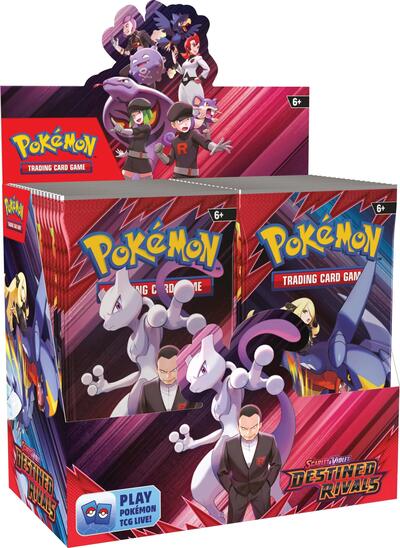
Destined Rivals Booster Box
A standard 36-pack Destined Rivals booster box. Every pack is random; a box gives a larger sample of the set but does not guarantee any Special Illustration Rare. Popular with openers and sealed collectors alike — check current street price against MSRP, as hot sets often trade above it.
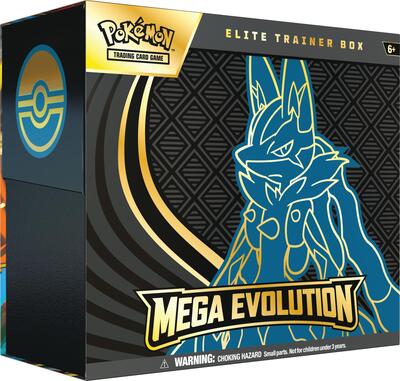
Mega Evolution Elite Trainer Box
Nine random Mega Evolution packs plus sleeves, dice, energy cards and a promo. This ETB ships in two art variants — Mega Gardevoir and Mega Lucario — with identical contents beyond the theming, so pick on looks, not odds. Packs inside are ordinary boosters with no special pull rates.
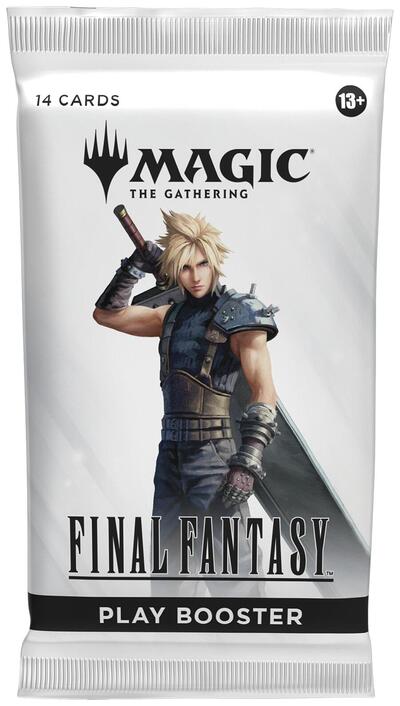
FINAL FANTASY Play Booster
A 14-card Play Booster from the FINAL FANTASY set, designed for drafting and general opening. Borderless character treatments can appear, but they are concentrated in Collector Boosters — a Play Booster is the gameplay-first way to open this set. Heavy demand pushed street prices above MSRP at times; check the current listing.