Skip to content

TCG Pax uses affiliate links. We may earn a commission from TCGplayer at no extra cost to you. Learn more

TCGPax

Yu-Gi-Oh! Pack Guide: Core Sets, Structure Decks, and the QCSR Chase

Last reviewed:

Quick answer

Yu-Gi-Oh! core sets come in 9-card packs and 24-pack booster boxes, with the Quarter Century Secret Rare — observed at roughly one per box — as the modern chase. Structure decks are the game’s standout value for players: fixed lists, low prices, and the classic advice to buy three copies for consistency. Rarity collection sets exist mainly for chase opening, and singles remain the efficient route to any specific card.

The Yu-Gi-Oh! product landscape

Konami’s lineup revolves around core booster sets — four per year, sold in 9-card packs and 24-pack boxes — surrounded by structure decks, side sets, and periodic premium "rarity collection" releases. Prices per pack are among the lowest in the hobby, which makes Yu-Gi-Oh! one of the cheapest games to open casually.

Main Yu-Gi-Oh! product types
ProductContentsBest for
Core set booster pack9 cardsCasual opening, current card pool
Core set booster box24 packsVolume opening, the QCSR chase
Structure deckFixed ~45-card listPlayers; buy up to three for consistency
Rarity collection / anniversary setsReprints in premium raritiesChase opening, bling upgrades

Rarity and the Quarter Century chase

Core sets run Common, Super Rare, Ultra Rare and Secret Rare. The modern headline is the Quarter Century Secret Rare — a 25th-anniversary premium foil applied to select cards, community-observed at roughly one per 24-pack box. QCSR versions of popular cards carry large premiums over their regular printings, and they are where most of a modern box’s chase value sits.

Estimates, not guarantees

The ≈ 1-per-box QCSR figure is a community-observed estimate, not an official rate. Boxes with zero are normal, and which card appears is random — a QCSR slot is not a valuable-card slot by definition.

Structure decks: the quiet best deal

For anyone who wants to actually play, structure decks are the standout: a themed, functional deck with a known list for roughly the price of three or four packs. The traditional advice — buy three copies of the same structure deck for playset consistency — remains sound and still costs less than half a booster box. No random product in the game converts money into playable capability as efficiently.

Rarity collections and premium sets

Rarity Collection–style sets reprint staple cards across a spread of premium rarities, making every pack a chase pack. They are genuinely fun to open and useful for upgrading a deck’s finish, but they follow the same law as every premium product: the excitement is priced in, and pulling any specific card in its top rarity remains a long shot.

Honest buying advice

  • New player: one to three copies of a current structure deck before any random product.
  • Returning player: singles for the specific staples your decks need — Yu-Gi-Oh! reprints aggressively, and most staples get cheap within a year or two.
  • Casual opener: current core set packs — cheap per pack, with the QCSR as the box-level thrill.
  • Chase collector: price the QCSR single first; at one observed per box, the math usually favors buying the card.

Warning

No box guarantees any particular Quarter Century Secret Rare — or any specific card at all. Set a budget for the fun of opening, and treat hits as a bonus.
Products mentioned

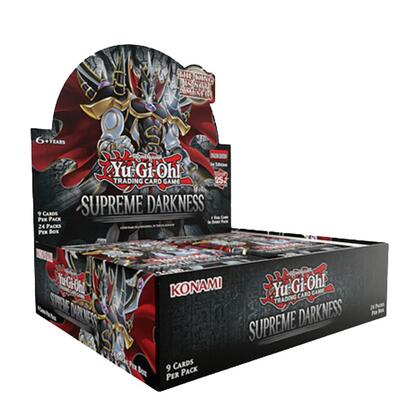
Supreme Darkness Booster Box

Supreme Darkness Booster Box

Yu-Gi-Oh!Booster Box

A 24-pack Supreme Darkness booster box. Community observation puts Quarter Century Secret Rares at roughly one per box, but which QCSR you hit is random and none is guaranteed. A reasonable buy for players who want a spread of the set plus one shot at the top rarity tier.

24 packsMSRP $107.76
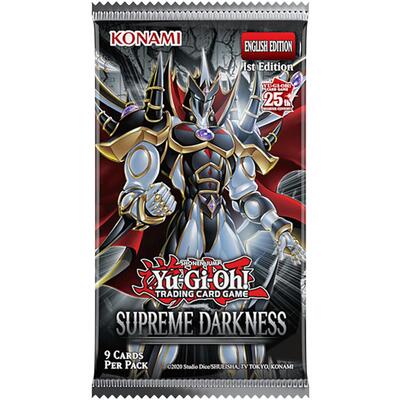
Supreme Darkness Booster Pack

Supreme Darkness Booster Pack

Yu-Gi-Oh!Booster Pack

A 9-card core booster from Supreme Darkness. Quarter Century Secret Rares are the estimated top pulls, at roughly one per box by community observation — so a single pack is a long shot. Best treated as a casual open or a way to pick up current archetype support.

9 cards/packMSRP $4.49
Quarter Century Bonanza Booster Pack

Quarter Century Bonanza Booster Pack

Yu-Gi-Oh!Booster Pack

A pack from the Quarter Century Bonanza reprint collection, built around 25th-anniversary foil treatments of iconic cards like Dark Magician. Reprint-collection packs carry higher foil density than core boosters, but cards per pack and rarity configuration vary by product — verify both on the listing. All contents are random; no specific foil is guaranteed.

9 cards/packMSRP $4.49

Frequently asked questions

How many packs are in a Yu-Gi-Oh! booster box?

Core set booster boxes contain 24 packs of 9 cards each. Some special and side sets use different configurations, so check the product.

What is a Quarter Century Secret Rare?

A premium anniversary foil treatment applied to select cards, community-observed at roughly one per core set box. It is the modern chase rarity, and popular cards in QCSR carry large premiums.

Why do players buy three structure decks?

Yu-Gi-Oh! allows three copies of most cards, and one deck contains one copy of its key cards. Three decks yield a full playset of the theme’s engine at a very low total cost.

Is Yu-Gi-Oh! cheap to get into?

Comparatively, yes. Structure decks are inexpensive, packs are among the hobby’s cheapest, and Konami’s reprint policy steadily pushes staple prices down. Meta decks still cost real money in singles.

Sources

  • Yu-Gi-Oh! TCG official site (Konami)Official · reviewed Jul 24, 2026
  • TCG Pax internal editorial analysis (community-observed ranges)Non-official · reviewed Jul 25, 2026
  • TCG Pax editorial teamNon-official · reviewed Jul 24, 2026

Keep reading

Basics

Understanding Rarity: Every Tier in the Six Major TCGs

Rarity describes how often a card type appears in packs, from commons (several per pack) up to chase tiers that appear once in dozens of packs or less. Each game names its tiers differently — Pokémon tops out at Special Illustration and Hyper Rares, Magic at Mythics with premium treatments, Yu-Gi-Oh! at Quarter Century Secrets, Lorcana at Enchanted. Higher rarity generally means lower pull odds and higher price, but demand, not rarity alone, sets a card’s value.

Updated Jul 24, 2026

Strategy

Booster Pack vs Booster Box: Which Should You Buy?

A booster box is simply a sealed case of packs — usually 24 to 36 depending on the game — and it almost always has a lower price per pack than buying packs individually. Boxes make sense when you already know you want many packs from one set; single packs make sense for sampling, gifts, or small budgets. Neither guarantees any specific card.

Updated Jul 24, 2026

Statistics

How Pull Rates Work: Odds, Sample Size, and What Stats Can’t Promise

A pull rate is the estimated frequency of a card or rarity appearing in packs — for example, "about 1 in 100 packs." Most pull rates are observed from community openings, not published by publishers, so they are estimates with real uncertainty. Even a solid estimate never guarantees results: at 1 in 100, opening 100 packs gives you only about a 63% chance of at least one hit.

Updated Jul 24, 2026